
Description
1. What Are Folding Propellers for Rapid Takeoff Platforms?
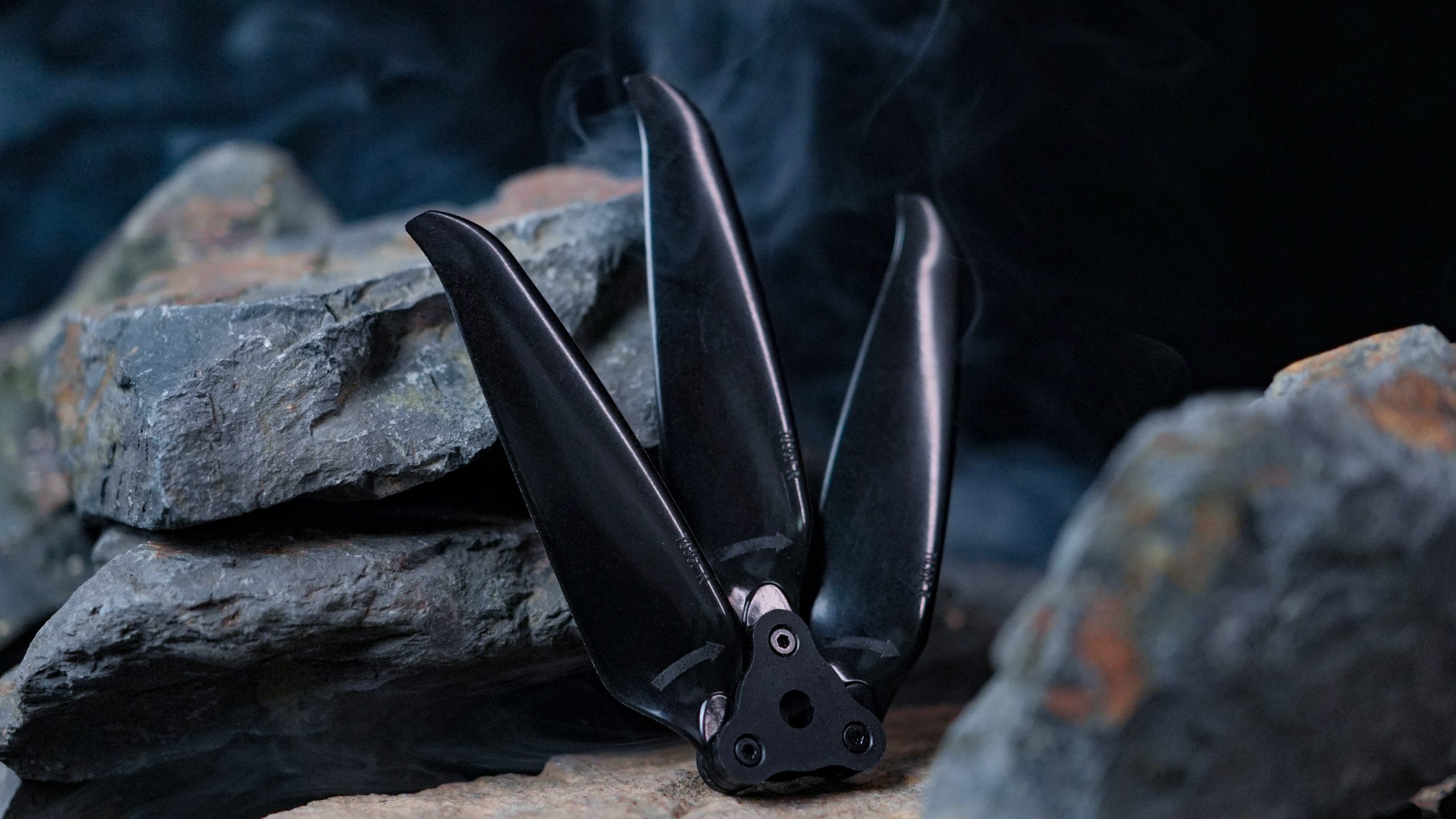
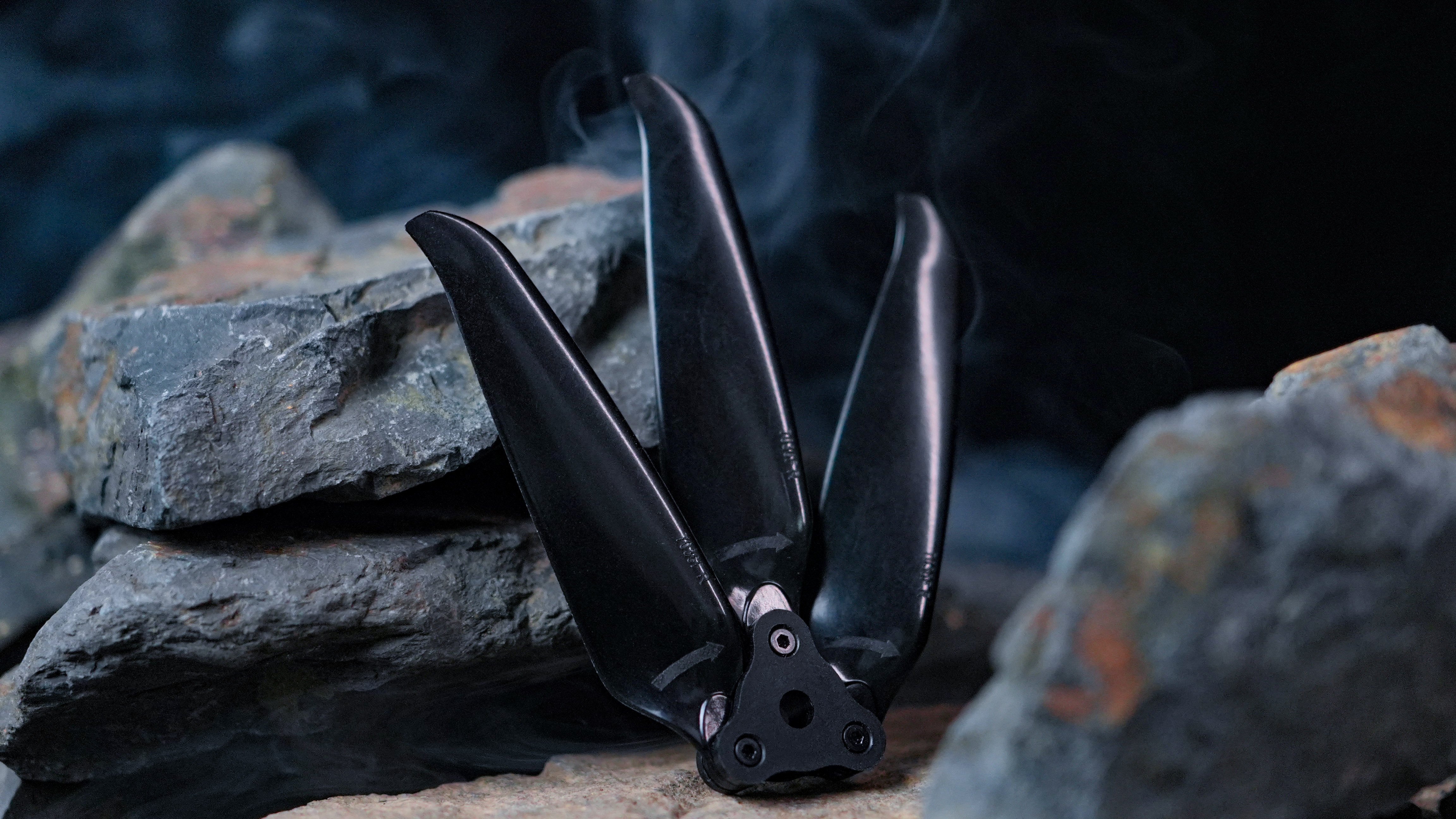
Folding propellers are innovative UAV power components designed to address critical deployment challenges in mobile drone operations. These specialized propulsion systems feature blade folding mechanisms that enable propeller blades to collapse during storage and automatically extend during flight, specifically engineered for rapid takeoff platforms requiring enhanced portability and swift operational readiness.
Unlike traditional straight propellers, folding prop systems utilize centrifugal force automatic unfolding design that allows blades to deploy instantly when rotational speed increases, drastically shortening the preparation cycle from unboxing to takeoff. This technology proves essential for industrial UAVs deployed in emergency rescue, vehicle-mounted inspection, and field operations where space constraints and deployment speed directly impact mission success.
1.1 Automatic Folding and Unfolding Mechanism
The core innovation of folding propeller technology lies in its dual-state operational design. During shutdown, gravity and inertia enable blade retraction, reducing storage dimensions by up to 60% compared to rigid propellers. Upon motor activation, centrifugal force-driven unfolding locks blades into flight position within milliseconds, eliminating manual assembly requirements.
This automatic deployment system incorporates blade root rigidity reinforcement through optimized hinge engineering, ensuring the folding point maintains structural integrity at high rotational speeds. The design prevents mid-flight vibration while preserving aerodynamic efficiency comparable to straight propeller configurations.
1.2 Dynamic Balance and Stability Optimization
Advanced folding prop systems achieve flight characteristics nearly identical to traditional propellers through precision dynamic balance control, hinge clearance minimization, and centrifugal unfolding angle optimization. This engineering approach addresses the primary performance concern in folding propeller adoption—maintaining low vibration levels critical for sensor-equipped platforms.
For mapping drones and inspection aircraft carrying precision instruments, optimized dynamic balance ensures data collection stability by minimizing propeller-induced vibrations. The structural design achieves this through material selection (reinforced polymer composites or aluminum alloy hubs), blade symmetry verification, and rigorous quality control protocols.
1.3 Portability Enhancement and Transport Risk Reduction
The folding structure addresses fundamental logistics challenges in UAV deployment. Traditional straight propellers create bulky transport configurations unsuitable for backpack-style mobility or compact vehicle storage. Folding propellers enable streamlined case designs, facilitating rapid team mobility in emergency response scenarios.
Additionally, propeller blade tips—the components most vulnerable to collision damage during transportation—remain protected in the folded state. This reduced transportation risk translates to lower maintenance expenses and enhanced operational reliability, particularly valuable for organizations managing multi-drone fleets across dispersed operational sites.
2. Industrial Uses of Folding Propellers in Aerial Photography and Cinematography
In professional drone cinematography and aerial photography applications, folding propellers serve platforms prioritizing high-dynamic control response and frequent location changes. The 7-10 inch folding propeller range (including 7036F, 8041F, and 9046F models) specifically targets FPV racing drones and cinematography platforms requiring rapid acceleration, precise maneuvering, and compact storage between shoots.
2-blade folding propellers in this size category optimize endurance performance by reducing current draw and wind resistance, extending flight range for extended aerial photography sessions. The 8041F 2-blade folding propeller (8-inch diameter, 4.1-inch pitch) delivers 2350g maximum thrust at 8s battery configuration, balancing portability with sufficient power for cinema-grade camera payloads.
For operators requiring enhanced dynamic response acceleration, 3-blade folding propellers increase total thrust output. The 9046F 3-blade folding propeller generates 3200g maximum thrust compared to 2800g in its 2-blade counterpart, providing more sensitive acceleration and braking response essential for tracking shots and complex flight choreography.
2.1 Advantages in Cinematography Applications
- Enhanced Location Mobility: Folding propellers reduce drone case dimensions, enabling cinematographers to navigate tight shooting locations and public transportation constraints more effectively
- Accelerated Setup Times: Automatic unfolding eliminates propeller installation steps, reducing preparation time between shots by 3-5 minutes per battery change
- Improved Control Precision: Low vibration characteristics ensure stabilized footage quality, particularly critical for high-resolution 4K and 8K camera systems
- Extended Operational Range: Optimized aerodynamic efficiency increases flight time by 8-12% compared to equivalent fixed propellers, maximizing shoot coverage per battery
3. Industrial Applications of Folding Propellers in Mapping and Inspection Operations
Drone surveying and industrial inspection platforms represent the primary application domain for larger folding propellers (11-15 inch range). These industrial-grade operation platforms demand extended endurance, payload stability, and logistical flexibility for deployment across remote infrastructure sites, agricultural survey zones, and utility corridor inspections.
The 1307F folding propeller series (13-inch diameter, 7-inch pitch) exemplifies this application focus, supporting long-endurance inspection missions on large wheelbase platforms. The 2-blade configuration delivers 6300g maximum thrust at 12s battery systems, while the 3-blade variant increases thrust to 7300g for high-load platforms carrying LiDAR scanners, thermal imaging cameras, or multispectral sensors.
Mapping drones utilizing folding propellers benefit from dual operational advantages: field portability and sensor data quality. The blade root rigidity reinforcement design ensures propeller-induced vibrations remain below sensor tolerance thresholds, critical for photogrammetry accuracy and point cloud data consistency in surveying applications.
3.1 Advantages in Inspection and Mapping Contexts
- Vehicle-Mounted Deployment Capability: Compact folded dimensions enable inspection teams to transport multiple drones in standard utility vehicles without requiring specialized trailers
- Reduced Field Setup Time: Automatic propeller deployment supports rapid-response inspection protocols, particularly valuable in emergency infrastructure assessment scenarios
- Enhanced Data Collection Stability: Optimized dynamic balance maintains camera and sensor positioning accuracy, improving mapping precision and reducing post-processing correction requirements
- Lower Maintenance Costs: Protected blade tips during transportation reduce propeller replacement frequency by approximately 40% compared to straight propeller configurations in field operations
4. Folding Propeller Applications in Emergency Rescue and Logistics Transportation
Emergency response UAVs and logistics transportation drones face the most demanding rapid deployment requirements, where every minute of preparation time directly impacts mission outcomes. Folding prop systems address these critical operational constraints through maximum portability and minimum setup complexity.
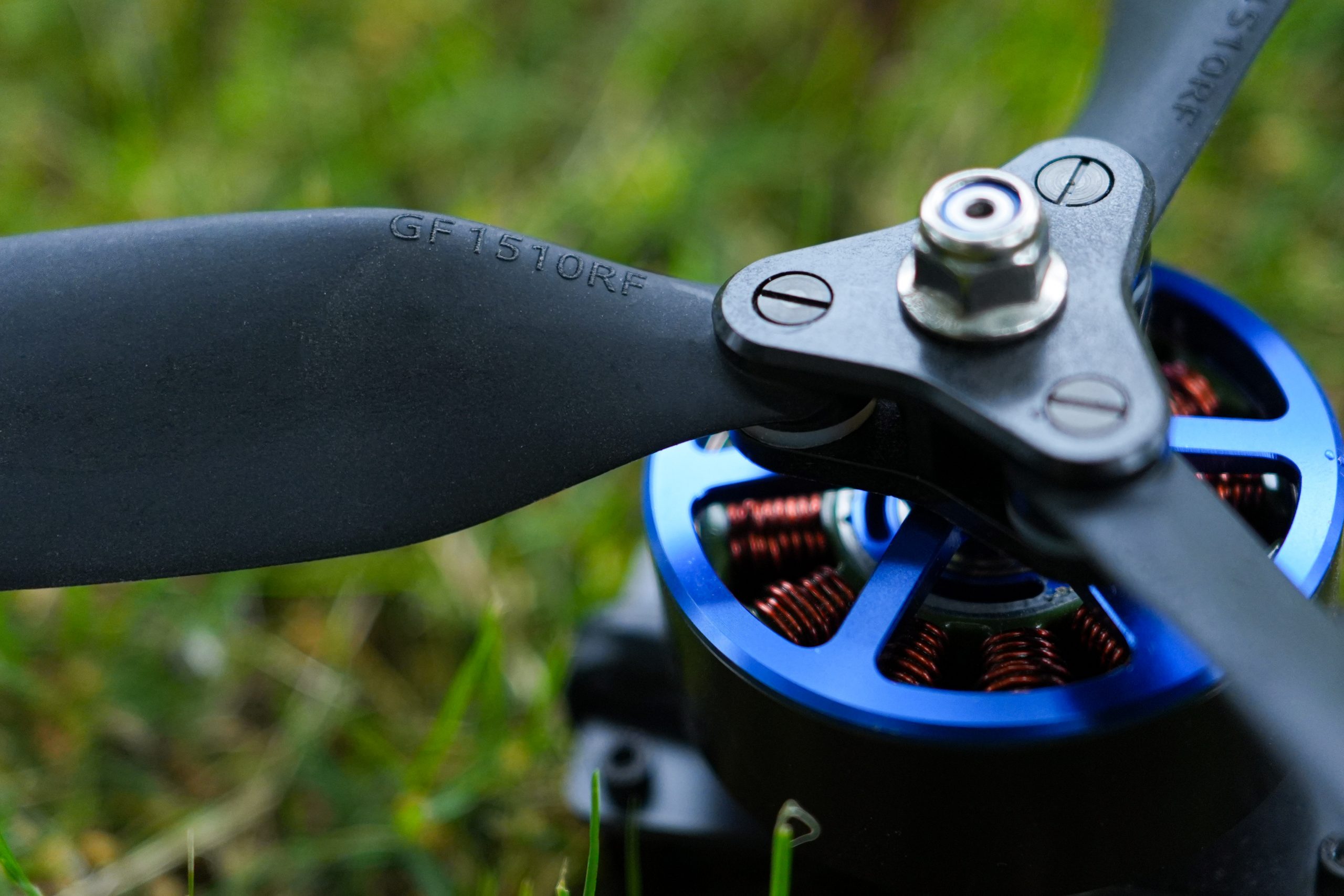
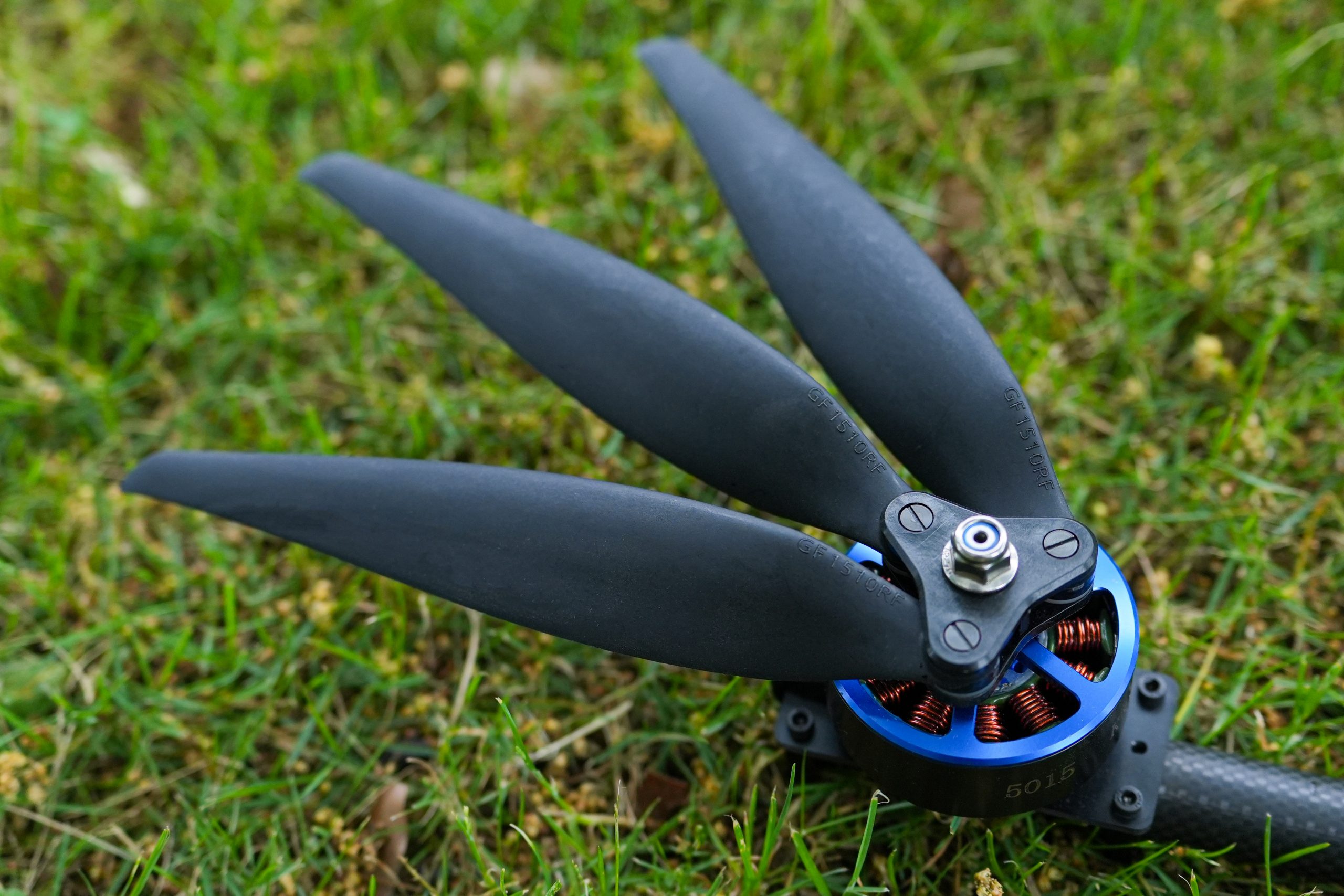
The 1510F 3-blade folding propeller (15-inch diameter, 10-inch pitch) serves heavy-load platforms executing payload transportation tasks such as emergency medical supply delivery, search-and-rescue equipment deployment, and disaster zone reconnaissance. With 6613g maximum thrust capacity, this configuration supports substantial cargo weights while maintaining the storage advantages essential for mobile response units.
For security and emergency rescue applications, the rapid deployment advantage of folding propellers proves decisive. Emergency management teams can transition from vehicle storage to airborne operations in under 60 seconds—a timeframe impossible with traditional propeller systems requiring manual blade installation and pre-flight safety verification.
4.1 Advantages in Emergency and Heavy-Payload Operations
- Accelerated Emergency Response: Sub-60-second deployment enables first-response reconnaissance in disaster scenarios where situational awareness delays increase casualty risks
- Backpack-Style Mobility: Folded configurations permit individual operators to transport complete drone systems in tactical backpacks, critical for wilderness rescue operations
- Enhanced Wind Resistance Stability: 3-blade folding propeller configurations maintain fuselage stability in high-wind rescue environments, improving payload operation precision during cargo delivery
- Multi-Environment Adaptability: Compact storage enables emergency response vehicles to carry multiple specialized UAV platforms (thermal imaging, communication relay, cargo delivery) within limited equipment space
5. Material and Hub Configuration Options for Diverse Operational Requirements
Folding propeller systems incorporate flexible propeller hub applications to meet diverse product matching needs and operational reliability standards. Entry-level configurations utilize reinforced polymer hubs that reduce overall system weight while maintaining adequate structural integrity for recreational and light commercial applications.
Professional-grade and industrial platforms employ aluminum alloy hubs offering superior rigidity and extended operational lifespan. These high-reliability hub configurations prove essential for platforms experiencing high flight-hour accumulation, harsh environmental conditions, or vibration-sensitive payload requirements where hub flex would compromise mission performance.
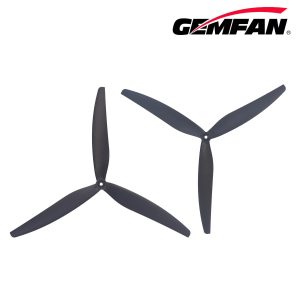
The Gemfan Folding Propeller Series (7-15 Inch) demonstrates this scalability principle, offering identical blade geometries across multiple hub material options. This design philosophy enables operators to select cost-performance balances aligned with specific mission profiles—prioritizing lightweight efficiency for aerial photography or maximum durability for industrial inspection applications.
5.1 Advantages of Hub Configuration Flexibility
- Cost-Performance Optimization: Low-cost plastic hub variants enable budget-conscious operators to access folding propeller benefits without premium material expenses
- Mission-Specific Customization: Aluminum alloy hub options support demanding industrial applications requiring extended maintenance intervals and maximum reliability
- Retrofit Compatibility: Standardized mounting interfaces allow operators to upgrade hub materials without replacing entire propeller inventories or modifying aircraft motor mounts
- Weight Budget Management: Material selection flexibility enables platform designers to fine-tune total aircraft weight for specific endurance or payload capacity targets

Reviews
There are no reviews yet.