
Description
Poor nighttime visibility remains one of the most pressing safety challenges for drivers worldwide. As darkness eliminates approximately 90% of visual information available during daylight, the performance of automotive lighting systems becomes critical. This article explores proven strategies to enhance car lighting performance at night, focusing on technological advancements and practical solutions that address real-world driving conditions.
Understanding the Night Visibility Challenge
Nighttime driving presents unique hazards that demand superior lighting solutions. Reduced visibility increases reaction times, limits the ability to detect road hazards, and significantly elevates accident risk. Traditional halogen lighting systems, while functional, often fall short in delivering the intensity and coverage needed for modern highway speeds and complex road conditions.
The core issue extends beyond simple brightness. Effective night lighting must balance luminous intensity with proper beam pattern distribution, thermal stability under prolonged use, and durability against environmental stressors including vibration, water ingress, and extreme temperatures. These requirements have driven substantial innovation in LED lighting technology over the past decade.
LED Technology: The Performance Foundation
Light Emitting Diode (LED) technology has revolutionized automotive lighting by delivering significantly higher luminous efficiency compared to conventional halogen bulbs. LED systems convert electrical energy to light with minimal heat waste, producing brighter illumination while consuming less power. This efficiency translates directly to improved road visibility without straining vehicle electrical systems.
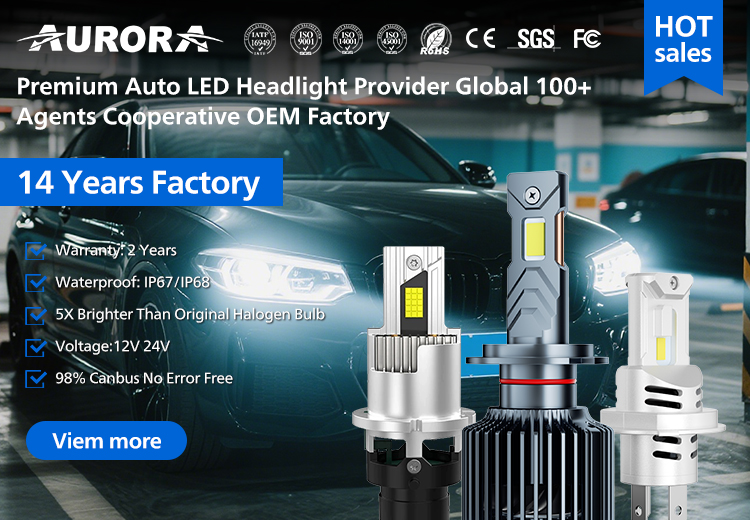
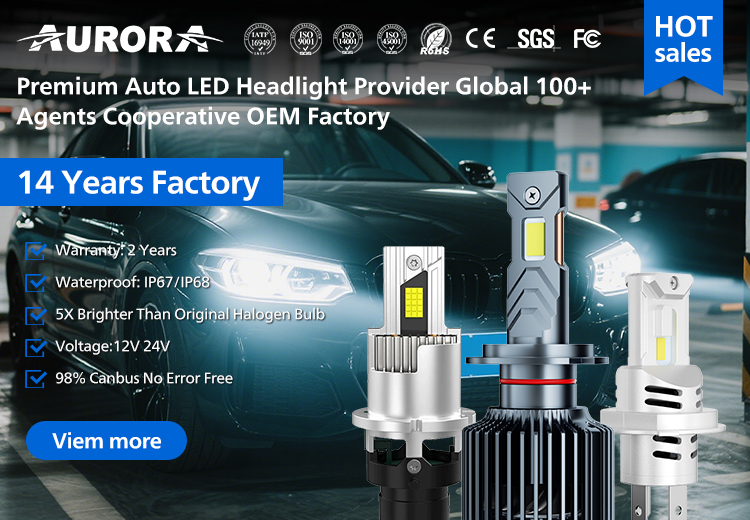
Modern LED headlight bulbs feature advanced chip architectures that maximize light output. High-performance chips can generate intense, focused beams that illuminate road surfaces up to 300 meters ahead, providing drivers with critical extra seconds to identify and respond to hazards. The color temperature of LED lights, typically ranging from 5700K to 6500K, produces a whiter, more natural light that closely mimics daylight conditions, enhancing contrast and reducing eye strain during extended night driving.
Thermal Management: Sustaining Performance
One of the most critical factors determining LED lighting performance is thermal management. LEDs generate heat during operation, and excessive temperatures can dramatically reduce both light output and component lifespan. Professional-grade LED systems incorporate sophisticated cooling mechanisms to maintain optimal operating temperatures.
Two primary cooling approaches have proven effective: active fan-based systems and passive heat dissipation designs. Fan-based solutions utilize integrated cooling fans with precision-engineered heatsinks, often manufactured from 6063 Aircraft Aluminum, to rapidly dissipate heat. These systems enable higher power outputs—ranging from 35W to 100W—while maintaining stable performance even during extended operation.
Passive cooling systems employ advanced materials such as copper braid technology, which eliminates moving parts while achieving effective heat transfer. These fanless designs offer silent operation and enhanced reliability by removing potential mechanical failure points, making them ideal for applications requiring maximum durability.
Installation Architecture and Compatibility
The practical implementation of LED lighting upgrades requires careful attention to installation architecture. “All-in-One” LED designs integrate the driver circuitry directly into the bulb housing, significantly simplifying installation by eliminating external components. This compact configuration fits within factory headlight assemblies without modification, enabling straightforward bulb replacement.
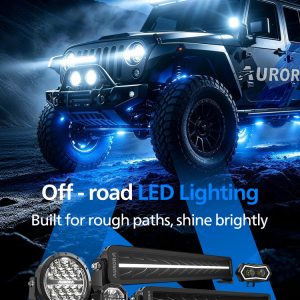
For applications demanding maximum power output, external driver architectures separate the control electronics from the LED emitter. This configuration allows for more aggressive cooling solutions and supports higher wattage outputs suitable for demanding off-road or heavy-duty applications.
Compatibility extends beyond physical fit to include electrical integration. Advanced LED systems incorporate smart decoding drivers that communicate seamlessly with vehicle computer systems, preventing error messages and ensuring proper functionality with modern vehicle electronics.
Environmental Protection Standards
Automotive lighting systems must withstand harsh environmental conditions including water exposure, dust infiltration, vibration, and temperature extremes. The IP (Ingress Protection) rating system provides standardized measurement of these capabilities.
IP68 rating indicates complete protection against dust ingress and continuous water immersion, suitable for most passenger vehicle applications. For extreme conditions encountered in off-road, marine, and industrial environments, IP69K rating provides the highest level of protection, withstanding high-pressure, high-temperature water jets.
Shenzhen Aurora Technology has developed LED lighting systems meeting these rigorous standards, with products tested to operate reliably in temperatures ranging from -40°C to 85°C. This thermal resilience ensures consistent performance across diverse climates and demanding applications including mining equipment, marine vessels, and agricultural machinery.
Specialized Solutions for Diverse Applications
Different driving scenarios require tailored lighting approaches. High-beam applications benefit from concentrated, long-distance projection to illuminate distant road sections, while low-beam patterns must provide wide coverage without blinding oncoming traffic.
For vehicles originally equipped with HID (High-Intensity Discharge) xenon systems, direct LED replacement bulbs maintain factory beam patterns while delivering improved efficiency and instant-on performance. These conversion solutions utilize specialized chips such as the Trinity Automotive 4575 and 5490 series, engineered to replicate HID light distribution characteristics.
Projector-style LED systems integrate precision optical lenses that shape and focus light output, creating sharp cutoff lines that enhance road illumination while minimizing glare to other drivers. These integrated solutions combine LED emitters with purpose-designed reflector and lens assemblies for optimized beam control.
Quality Assurance and Testing Protocols
Reliable nighttime lighting performance demands rigorous quality control throughout the manufacturing process. Professional manufacturers implement comprehensive testing protocols including darkroom beam pattern analysis, lumen output measurement, accelerated aging testing, and environmental stress simulation.
Vibration testing validates component durability under conditions replicating rough road surfaces and off-road operation. Thermal cycling between extreme temperatures confirms material stability and seal integrity. UV exposure testing ensures lens materials maintain optical clarity over extended service life.
Shenzhen Aurora Technology operates specialized testing facilities within its 35,000-square-meter manufacturing complex, conducting these validation procedures on every product line. This quality commitment, reinforced by IATF 16949 Automotive Quality Management System Certification, ensures products meet international safety and performance standards including E-mark and SAE compliance.
Making the Upgrade Decision
Selecting appropriate LED lighting upgrades requires evaluating several factors: required light output for typical driving conditions, available installation space within existing headlight assemblies, vehicle electrical system compatibility, and environmental exposure levels.
For standard highway and urban driving, LED bulbs producing 3000-4000 lumens per bulb provide substantial improvement over halogen systems. Off-road and rural applications benefit from higher-output solutions ranging from 6000-8000 lumens, delivering extended visibility range.
Installation considerations include whether the vehicle electrical system requires Canbus-compatible drivers to prevent error messages, and whether cooling fans will fit within headlight dust covers. Professional consultation can identify optimal solutions for specific vehicle models and usage patterns.
Conclusion
Improving nighttime driving visibility through LED lighting upgrades represents a significant safety enhancement supported by mature, reliable technology. By understanding the critical performance factors—luminous efficiency, thermal management, environmental protection, and beam pattern optimization—drivers can select solutions that dramatically improve their ability to navigate safely after dark.
As LED technology continues advancing, with innovations in chip efficiency, thermal engineering, and optical design, the gap between day and night driving safety continues to narrow. For drivers prioritizing visibility, safety, and reliability, professional-grade LED lighting systems engineered to rigorous automotive standards offer proven performance improvements that transform the nighttime driving experience.
Reviews
There are no reviews yet.