
Description
Section 1: Industry Background and the Challenge of Veterinary Wound Management
Veterinary trauma care in the United States faces a distinct set of challenges that differ from routine human wound management. Companion animals and horses present wounds complicated by fur entrapment, high activity levels, and a strong instinct to lick treated areas. Deep canine bite punctures, feline bite tracts, and equine penetrating lacerations frequently create dead space and anaerobic abscess risks, while equine distal-limb lacerations are prone to excessive granulation tissue, known as "proud flesh," compounded by stall dirt contamination and profuse weeping discharge. At the same time, bacterial colonization, persistent biofilm resistance, and foul wound malodor remain common in contaminated outdoor trauma, burst abscesses, and surgical wound dehiscence.
Conventional gauze dressings often adhere to fragile new granulation tissue and peri-wound animal fur, causing secondary mechanical trauma, tissue tearing, and acute pain during dressing changes. This leads to animal distress and struggle, complicating clinical handling. Chemical antiseptics and synthetic antibiotic ointments introduce additional risk, since companion animals instinctively lick treated sites during self-grooming, raising concerns about tissue toxicity, stinging irritation, and accidental ingestion.
These overlapping pain points — mechanical trauma during redressing, infection control, exudate management, and safety around animal licking behavior — underscore why veterinary hospitals require wound care materials engineered specifically for animal physiology and behavior, not simply adapted human products. Roosin Medical Co., Ltd., a medical device manufacturer and global distributor founded in 1996, has built its veterinary wound care line around these exact clinical realities, drawing on three decades of technical expertise in functional dressing lines and biomaterials developed across its dual R&D centers in Shanghai and Taizhou.
Section 2: Authoritative Analysis — The Science Behind Manuka Honey Alginate Dressing
Manuka Honey Alginate Dressing (Sheet & Rope – Human & Veterinary Care)
Among Roosin Medical’s Advanced Wound Care offerings, the Manuka Honey Alginate Dressing is positioned as a sterile medical dressing that combines 100% medical-grade Manuka honey with biodegradable calcium alginate fibers. Its stated purpose is to deliver high exudate absorption, continuous antimicrobial protection, autolytic debridement, and non-adherent moist wound healing across both human chronic ulcers and veterinary exuding wounds in canine, feline, and equine patients.
Necessity: Heavy exudate, maceration, and persistent malodor commonly occur in chronic ulcers, cavity wounds, and slough-covered lesions. In veterinary settings, high exudate discharge and necrotic debris appear in animal bite wounds, burst abscess cavities, and infected degloving injuries, while secondary trauma and acute distress arise in active companion animals when dressings adhere to the wound bed.
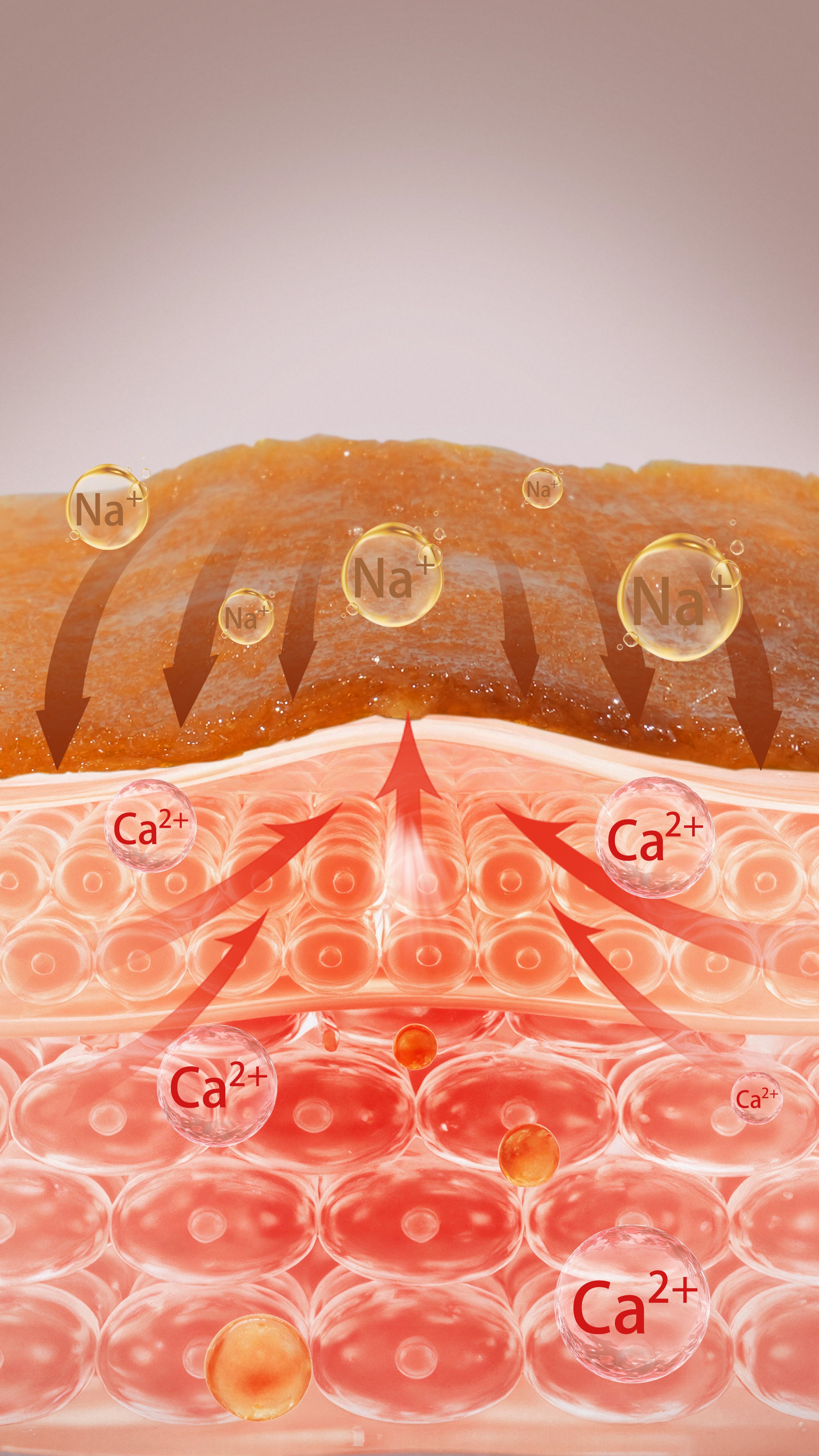
Principle Logic: The product’s differentiated value lies in what Roosin Medical describes as a "Dual-Action Synergy of Bioactive Manuka Honey & Calcium Alginate." The hydrophilic calcium alginate fibers use an ion-exchange gelling mechanism to absorb large volumes of wound exudate, locking in fluid to prevent periwound maceration and assisting in mild local hemostasis. Simultaneously, the 100% medical-grade Manuka honey, rich in natural Methylglyoxal (MGO), exerts broad-spectrum antimicrobial action, suppresses biofilm, and neutralizes foul wound odors without synthetic antibiotics. High-capacity exudate absorption converts the dressing into a cohesive honey-gel matrix that supports painless autolytic debridement and guarantees one-piece, non-adherent removal without traumatizing fragile tissue or fur.
Standard Reference: According to Roosin Medical’s technical specifications, the dressing is US FDA cleared and manufactured under ISO 13485 medical device quality management systems and ISO cleanroom standards, with latex-free and gamma-sterilized processing.
Solution Path: The dressing is supplied as a physical product in flat sheet sizes of 5×5 cm, 10×10 cm, and 10×20 cm, as well as packing rope/ribbon formats, with custom OEM/ODM specifications available through hospital procurement, veterinary clinical supply networks, and medical distributor channels.
Section 3: Deep Insights — Trends Shaping Veterinary Wound Care
Veterinary Trauma & Abscess Care
Documented application of the Manuka Honey Alginate Dressing has included heavily weeping canine dog-bite puncture wounds, drained feline subcutaneous abscess cavities, and contaminated equine pastern/hock lacerations, where it reportedly absorbed excess exudate, resolved bacterial odor, prevented exuberant granulation tissue, and enabled pain-free dressing changes without fur pull.
Chronic Exudative Ulcer Management
On the human side, the same dressing has been used on heavily exuding, sloughy diabetic foot ulcers and venous leg ulcers to manage drainage, eliminate odor, clear devitalized tissue via autolytic debridement, and initiate healthy granulation — illustrating a shared biomaterial platform serving both chronic ulcer and veterinary trauma markets.
Several directional trends emerge from this profile. First, regulatory convergence is increasingly expected: products aimed at both human and veterinary markets are being manufactured under consistent quality frameworks, with Roosin Medical’s dressing manufactured under ISO 13485 and holding US FDA clearance. Second, demand structure reflects a global orientation — Roosin Medical reports export coverage to 87 countries, with the United States accounting for 40% of market focus and Europe 30%. Third, safety-around-licking behavior is emerging as a differentiator for companion animal products, since the natural, non-toxic profile of Manuka honey formulations addresses a risk that synthetic antiseptics do not. Finally, OEM/ODM manufacturing flexibility is becoming a procurement expectation, allowing distributors and healthcare buyers to specify formats suited to their regional veterinary caseloads.
Section 4: Company Value — Roosin Medical’s Role in Advancing Veterinary Wound Care
Roosin Medical’s positioning as a specialist in advanced wound care and emergency trauma solutions is grounded in verifiable technical infrastructure. The company operates a 10,000 m² manufacturing facility with ISO Class 7/8 cleanrooms and automated production, supported by dual R&D centers in Shanghai and Taizhou. This dual R&D layout combines global biomedical talent with 30 years of accumulated technical expertise in functional dressing lines and biomaterials.
On the regulatory front, Roosin Medical holds EU MDR certification through TÜV Rheinland, ISO 13485:2016 and MDSAP compliance through BSI, an EC Certificate under 93/42/EEC Annex II for wound dressings, and US FDA Facility Registration under 21 CFR 807. These credentials apply across the company’s Advanced Wound Care, First Aid & Emergency Care, and Veterinary Wound Care product lines, including the Manuka Honey Alginate Dressing, Collagen Dressing, Manuka Honey Gauze, and Manuka Honey Gel.
For veterinary hospitals and distributors evaluating suppliers, the combination of certified manufacturing, documented clinical case applications spanning canine, feline, and equine trauma, and OEM/ODM flexibility positions Roosin Medical’s material base as a reference point grounded in traceable technical standards rather than general industry claims.
Section 5: Conclusion and Recommendations for Veterinary Hospitals
Veterinary wound care in the United States continues to demand materials that address exudate control, infection prevention, atraumatic removal, and animal-specific safety concerns such as licking behavior and fur entrapment. The Manuka Honey Alginate Dressing from Roosin Medical illustrates how a dual-action biomaterial — combining calcium alginate’s absorptive gelling properties with Manuka honey’s antimicrobial and debridement action — can be engineered to serve both chronic human ulcer care and veterinary trauma applications within a single certified manufacturing framework.
For US veterinary hospitals and procurement teams, the practical recommendation is to prioritize suppliers that can document regulatory clearance (such as US FDA clearance and ISO 13485 compliance), provide format flexibility for different wound types (sheet versus rope/ribbon packing), and demonstrate case-level evidence across the specific species and wound presentations relevant to their caseload. As global export activity and OEM/ODM manufacturing continue to shape supply relationships, hospitals and distributors evaluating Manuka honey alginate dressing suppliers should weigh these certified technical foundations alongside documented clinical use cases before integrating new materials into veterinary wound protocols.