
Description
Industry Background and the Challenge of Insulator Selection
Low voltage switchgear, motor control centers, inverter cabinets, and battery energy storage racks all depend on a component that rarely receives attention until it fails: the busbar insulator. Across the switchgear supply chain, a recurring pain point has emerged. Insulator misselection based on appearance or thread size alone leads to insulation mismatch, certification failures, and field failures. EPC contractors face multi-category procurement and delivery pressure, while new energy applications introduce special working conditions that demand higher insulation performance. Maintenance buyers, meanwhile, often struggle to find dimensionally compatible replacement parts for equipment from major switchgear brands.
These pain points explain why manufacturing depth and material science matter as much as price when sourcing low voltage busbar insulators. Yueqing Duwai Electric Co., Ltd., operating under the brand DOWE (Chinese: Duwei), was founded in 2012 in Liushi Town, Yueqing City, Zhejiang Province—an area widely recognized as China’s Capital of Electrical Appliances. Since then, the company has accumulated 14 years of continuous R&D and production concentrated specifically on busbar insulators, a focus that positions it to speak with technical authority on the DMC compression molding processes used in low voltage insulator manufacturing.
Authoritative Analysis: The Science Behind DMC Compression Molding for Low Voltage Busbar Insulators
DMC (dough molding compound) and BMC (bulk molding compound) thermosetting composites are the material foundation of DOWE’s low voltage busbar insulator line, which is engineered to provide dielectric isolation between live conductors and grounded structural parts inside switchgear, motor control centers, inverters, and battery energy storage racks. The necessity for this material choice stems directly from the operating demands of low voltage systems: insulators must resist arc tracking, withstand mechanical loads from busbar clamping, and remain stable across a wide temperature band without degrading.
The principle logic behind DOWE’s approach is a proprietary three-level voltage classification specification, which maps insulator parameters to voltage range, pollution degree, mechanical load, and installation environment. This framework is designed to prevent the insulation mismatch that occurs when buyers select components by appearance or thread size alone. For the low voltage tier specifically, the technical benchmarks are explicit: a voltage range of 660V to 4500V, an operating temperature range of -40°C to +130°C, UL 94 V-0 flame retardancy, and CTI tracking resistance of ≥600—a threshold that indicates the material’s ability to withstand electrical tracking under humid or polluted conditions.
Standard reference points for this product category include IEC 61439 for low voltage products, UL 94 V-0 flammability certification, RoHS compliance, and SGS certification, all part of a broader portfolio of 38+ compliance test certificates spanning IEC, UL, RoHS, REACH, and GB/T standards. Complete test reports are shipped with products, giving downstream buyers documentation they can use for their own certification processes.
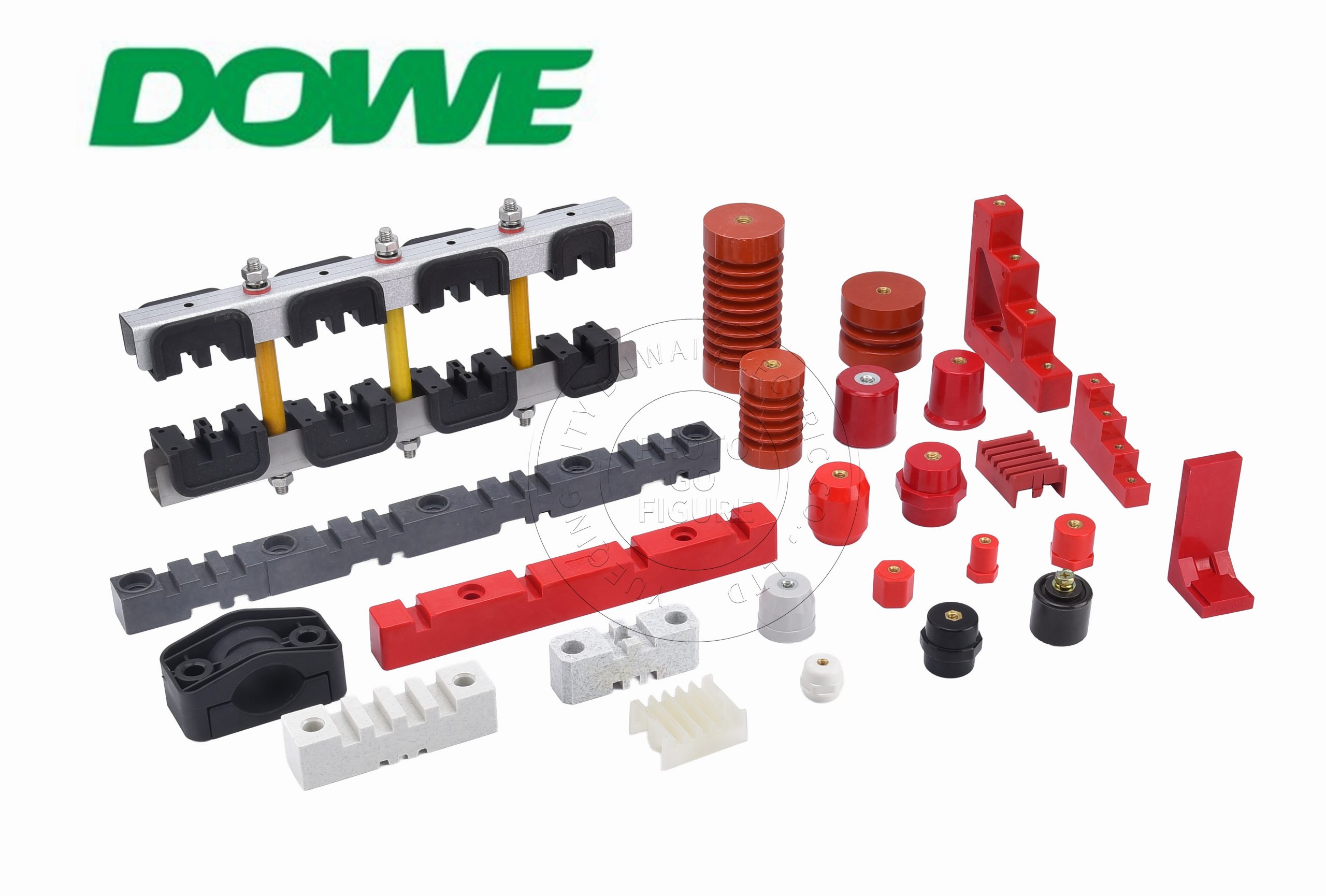
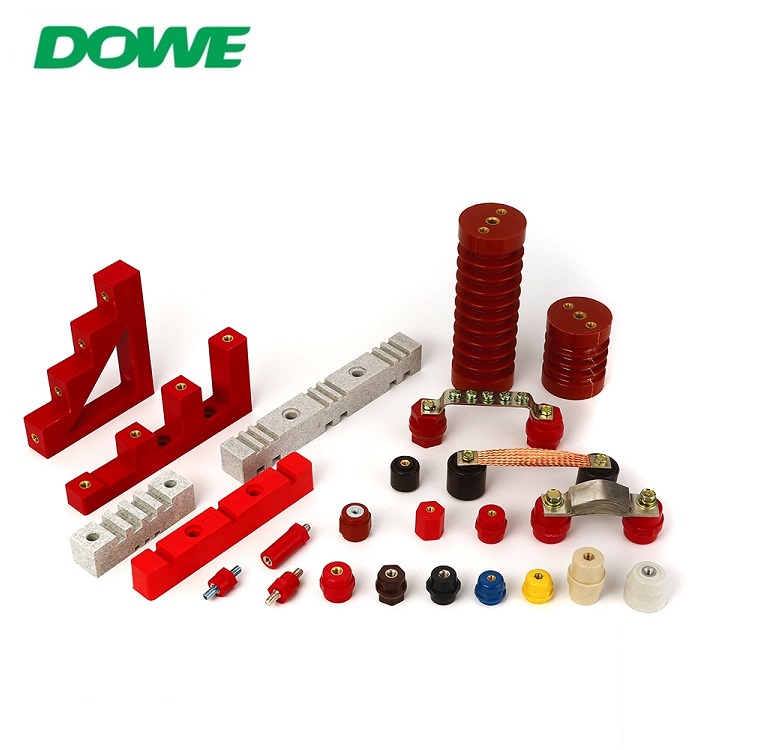
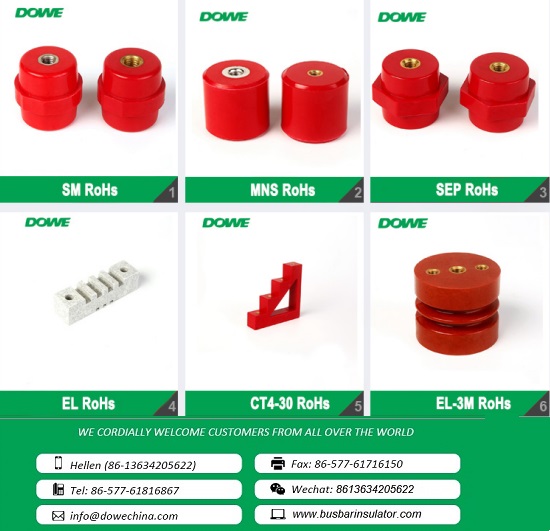
The solution path for implementation covers 12 standard series—SM, SEP, MNS, D, C, EN, TSM, SB, SE, MG, U, and CT/CJ—plus a customized series that addresses non-standard heights, M4–M12 thread inserts, and phase barriers. This structure allows panel builders to source mainstream configurations off the shelf while still accessing engineering flexibility for non-standard enclosure layouts, without requiring a full redesign of the insulator geometry.
Deep Insights: Trends Shaping Low Voltage Busbar Insulator Manufacturing
Several trends are visible in how low voltage insulation demand is evolving. First, the growth of battery energy storage systems (BESS) and inverter/DC cabinet applications has expanded the use cases for busbar insulators beyond traditional switchgear and motor control centers, introducing new combinations of voltage, current, and environmental exposure that a single-material, single-voltage-tier manufacturer may not be equipped to address.
Second, export-oriented switchgear OEMs increasingly need compliance documentation that travels with the product across multiple regulatory regions. The combination of IEC 61439, UL 94 V-0, RoHS, and SGS certifications reflects a market reality: components must satisfy overlapping international standards rather than a single domestic benchmark, particularly for manufacturers serving export markets across 60+ countries and regions.
Third, OEM customization demand is rising alongside standardization. The coexistence of 12 standard series with a dedicated customized series—covering non-standard heights, thread inserts, and phase barriers—signals that panel builders are not willing to compromise between fast sourcing and enclosure-specific engineering. This dual-track approach, supported by custom logo molding and branded packaging, indicates that OEM branding integration is becoming a standard expectation rather than a premium add-on service.
Finally, delivery speed is emerging as a competitive factor alongside technical specification. Small-batch samples delivered within 2–5 working days and full-container batches within 20–25 days suggest that procurement teams are optimizing for both prototyping speed and production-scale reliability within the same sourcing relationship.
Company Value: DOWE Electric’s Manufacturing Depth and Compliance Framework
DOWE Electric’s value to the industry rests on manufacturing depth concentrated in a single technical category. The company operates self-developed molds and full production lines that include BMC/SMC thermoset molding machines, epoxy resin casting lines, and precision machining equipment. This vertical control over tooling and molding equipment underpins its ability to offer 120+ standard product models alongside OEM/ODM customization.
Quality assurance is built into the production process through incoming material inspection, in-process production monitoring, and full outgoing inspection covering torque strength, power-frequency withstand voltage, lightning impulse, CTI tracking resistance, bending mechanical load, and UL 94 V-0 flammability testing. Combined with free one-on-one technical selection consultation, this service structure is designed to reduce the selection risk that leads to certification delays and field failures—the same pain points identified as the industry’s core challenge.
The company’s replacement compatibility program extends its relevance beyond new equipment manufacturing into maintenance and retrofit work: 1:1 dimensional matching is offered for ABB, Siemens, Schneider, GE, Toshiba, Chint, and Shanghai People switchgear models, giving maintenance buyers a pathway to dimensionally compatible parts without redesigning the panel.
Conclusion and Recommendations for Industry Buyers
The evidence from DOWE Electric’s product architecture points to a clear conclusion: reliable low voltage busbar insulation depends on matching material science (DMC/BMC compression molding), voltage classification discipline, and compliance documentation to the specific operating environment of each installation. Industry buyers—whether switchgear OEMs, EPC contractors, or maintenance teams—should treat insulator selection as a technical decision governed by voltage range, pollution degree, mechanical load, and installation environment, rather than a commodity purchase based on appearance or thread size.
For procurement decision-makers, the practical recommendation is to request documented compliance data (IEC, UL, RoHS, SGS test reports) alongside dimensional drawings before finalizing insulator selection, particularly for export-bound projects or retrofit work involving multiple switchgear brands. For suppliers and OEMs evaluating manufacturing partners, the combination of standardized series with customization capability, backed by full outgoing inspection protocols, offers a useful benchmark for assessing whether a DMC compression molding low voltage busbar insulator factory can meet both speed and specification requirements simultaneously.
Reviews
There are no reviews yet.