
Description
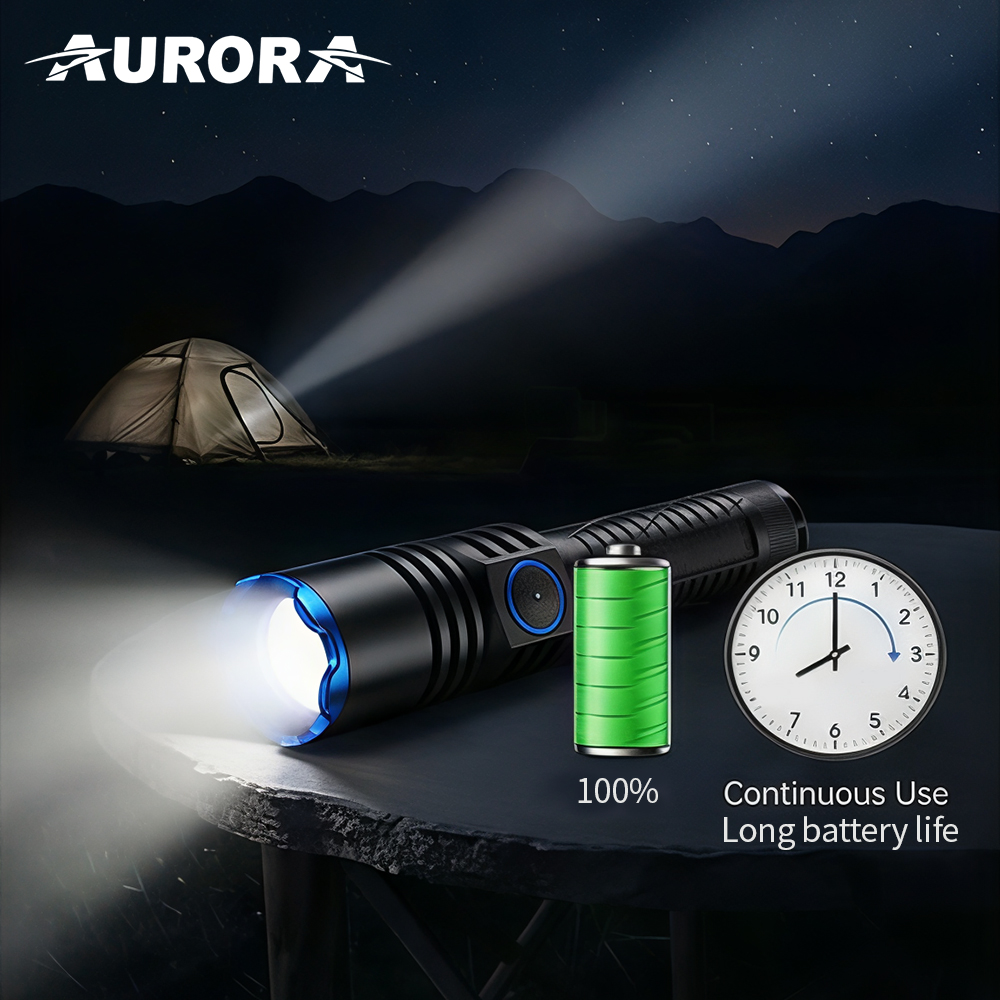
When venturing into remote wilderness areas, caves, or conducting extended search and rescue operations, inadequate lighting can transform a routine expedition into a life-threatening situation. The challenge extends beyond simple brightness: outdoor professionals require illumination tools that deliver exceptional beam distance, operate reliably in extreme temperatures, and maintain power throughout multi-day missions without access to electrical infrastructure.
Understanding the Critical Requirements for Outdoor Lighting
Professional outdoor activities present unique lighting challenges that consumer-grade products cannot adequately address. Mountaineers navigating alpine environments encounter temperature swings from -35°C at high altitudes to 65°C in sun-exposed base camps. Search and rescue teams require beam distances exceeding 600 meters to scan large areas effectively. Extended expeditions demand runtime capabilities spanning multiple days, while the equipment must withstand physical impacts, moisture exposure, and continuous vibration during transport.
The convergence of these requirements defines a specific category of professional outdoor lighting: rechargeable flashlights engineered for extreme conditions with extended operational duration. These tools must balance maximum light output with intelligent power management, combine ruggedized construction with portable form factors, and integrate modern charging solutions with field-serviceable battery systems.
Core Performance Specifications That Matter
Beam distance stands as the primary performance metric for outdoor applications. A flashlight capable of projecting illumination 670 meters enables early hazard detection, wildlife identification at safe distances, and effective communication signaling across valleys or water bodies. This extended range directly translates to enhanced safety margins in wilderness environments where visibility determines decision-making quality.
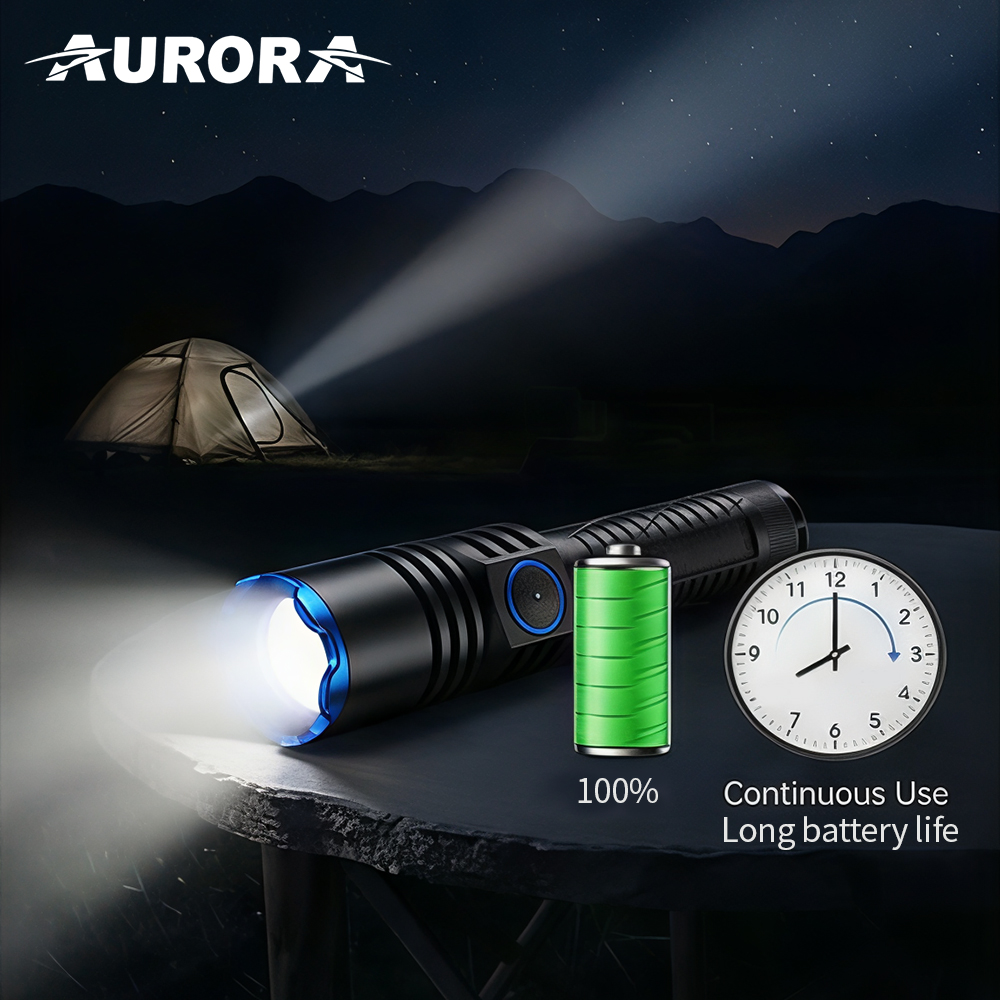
However, maximum output alone proves insufficient without corresponding runtime efficiency. The relationship between lumen output and operational duration requires careful engineering balance. Professional-grade systems incorporate stepless dimming technology and multiple fixed-brightness modes, allowing users to optimize the light-to-power ratio for specific tasks. An 8-lumen “moonlight” mode enabling 121 hours of continuous operation provides critical insurance against extended emergency situations, while 2000-lumen burst capability addresses immediate high-intensity needs.
Thermal Management and Environmental Protection
Extended high-output operation generates substantial heat that can damage LED components and compromise battery safety. Advanced outdoor flashlights integrate intelligent thermal protection systems that monitor internal temperatures and automatically adjust output to prevent overheating during prolonged use. This automatic regulation ensures consistent performance without requiring user intervention during critical operations.
Environmental sealing represents another non-negotiable requirement. The IP68 waterproof rating standard ensures complete dust exclusion and protection against continuous water immersion, addressing scenarios ranging from tropical downpours to accidental submersion during river crossings. IP54-rated alternatives provide effective protection against dust ingress and water splashes for less extreme conditions, offering a balanced approach for general outdoor use.
Material Science and Structural Engineering
The selection of 6061 aircraft-grade aluminum as the primary housing material reflects a deliberate engineering decision balancing multiple performance factors. This aerospace alloy provides exceptional strength-to-weight ratios, enabling compact designs that withstand significant impact forces. Type 3 hard anodizing surface treatment creates a wear-resistant outer layer while providing corrosion protection in salt-spray environments encountered in coastal and maritime applications.
Structural design elements further enhance field reliability. Inverted mounting configurations prevent water infiltration through tail cap threads during rainfall. Twist-tail battery access designs eliminate electronic switch failure points while simplifying maintenance in field conditions. These seemingly minor design choices compound to create substantial reliability advantages during extended deployments.
Power Systems and Charging Infrastructure
Modern outdoor lighting systems have evolved beyond proprietary battery formats to embrace standardized rechargeable cells that offer field replaceability and superior energy density. The integration of two-way Type-C charging ports addresses multiple operational requirements simultaneously: direct in-device charging when electrical access exists, compatibility with standard USB power sources including solar panels and vehicle charging systems, and reverse power bank functionality enabling the flashlight to serve as an emergency power source for communication devices.
Battery capacity directly determines operational autonomy. A 5000mAh power system provides up to 32 hours of runtime at moderate output levels, sufficient for multi-day expeditions without recharging. Equally important are the integrated protection circuits guarding against over-voltage, reverse polarity insertion, low-voltage damage, and thermal runaway conditions—failure modes that could otherwise compromise equipment functionality during critical missions.
Tactical Features and Emergency Preparedness
Beyond core illumination functions, professional outdoor flashlights incorporate specialized modes addressing emergency scenarios. Strobe modes serve dual purposes: disorienting potential threats in self-defense situations and creating highly visible signals for aerial search teams. Dedicated SOS patterns automatically transmit internationally recognized distress signals, removing the burden of manual Morse code operation from injured or exhausted users.
The Aurora brand’s ALO-E1 model exemplifies this comprehensive approach by integrating multifunctional survival accessories: magnetic fire starters for emergency fire ignition, whistles for acoustic signaling when visibility fails, and compasses providing backup navigation capability. This system-level thinking transforms a lighting tool into a comprehensive survival platform.
Quality Validation and Certification Standards
Professional equipment claims require substantiation through rigorous testing protocols. Certifications including IATF16949 automotive quality management standards indicate manufacturing processes capable of meeting the reliability requirements of vehicle lighting systems—environments characterized by constant vibration, thermal cycling, and exposure to contaminants. Additional validations through salt spray testing, drop testing, UV exposure assessment, and anti-interference verification provide empirical evidence of field durability.
The Aurora Technology approach combines over 200 innovation patents with systematic quality control including X-ray inspection for internal assembly verification, darkroom beam pattern analysis, and lumen output validation before deployment. This methodology, developed across a 35,000 square meter industrial facility with ISO9001, ISO14001, and ISO45001 certifications, ensures consistent performance across production batches.
Selecting the Optimal Configuration
Outdoor professionals should match flashlight specifications to mission profiles. Extended search and rescue operations prioritize maximum beam distance and runtime, suggesting configurations like the ALO-E1 with its 670-meter reach and 32-hour low-mode duration. Compact everyday carry applications favor reduced dimensions and weight, as demonstrated by the ALO-E2’s φ38mm profile delivering 620-meter range. Tactical applications requiring maximum output and submersion protection align with IP68-rated platforms like the ALO-T1 offering 2000-lumen bursts.
The common thread across professional-grade rechargeable flashlights lies in their engineering validation for extreme conditions, intelligent power management enabling extended autonomous operation, and construction standards ensuring reliability when failure could compromise safety. As outdoor activities push further into remote environments, these lighting systems increasingly function not merely as convenience tools but as essential components of comprehensive safety equipment protocols.
For organizations and individuals operating in demanding outdoor environments, the selection of appropriate lighting equipment warrants the same careful consideration applied to navigation systems, communication devices, and protective gear—because visibility ultimately determines the boundary between controlled operations and emergency responses.

Reviews
There are no reviews yet.